7 min read
Balance a Jade Plant Before Its Branches Get Heavy
Compare the direction of new growth and the stability of the pot before choosing which stems to shorten.
On this page
A jade plant often gives you time to notice a problem with its weight. One branch leans farther toward the window until the pot feels different when lifted. Thick leaves and older stems can make that side much heavier than it looks. Find out where the plant is standing, how much light it gets and whether the pot is secure before you solve the lean with shears. A carefully placed pot or a small selective cut may be enough. The healthiest trunk and branches can stay in place while next season's growth takes a more useful direction.
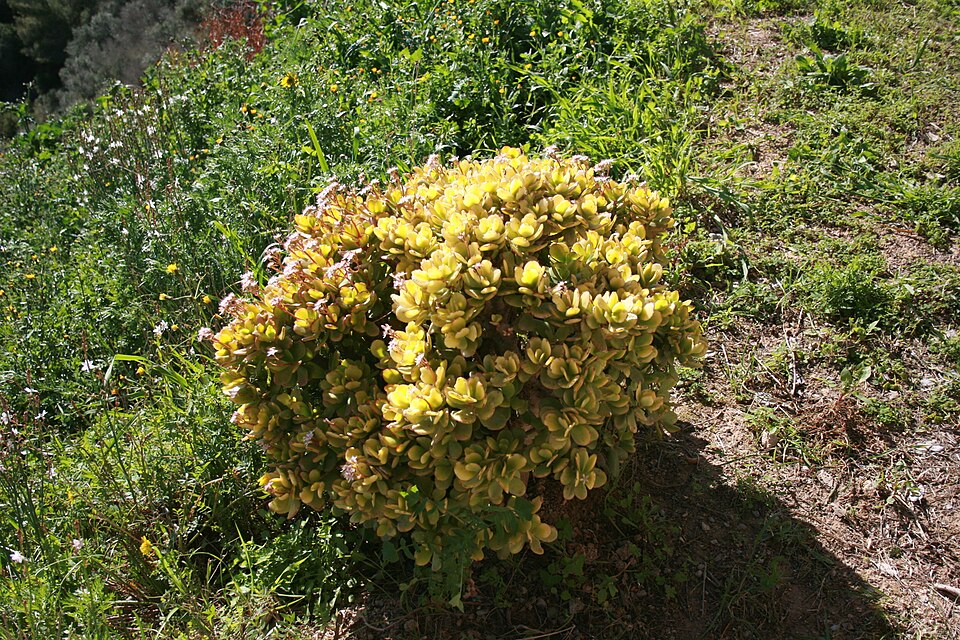
The usual jade plant is Crassula ovata, a succulent shrub commonly grown as a houseplant. Thick leaves and fleshy young stems store water. Mature stems become woody and can support a branching canopy. As the canopy gets heavier, check how much the pot moves when touched from the side and make sure the stand can take the weight. Acclimate a plant gradually when increasing its exposure. Keep jade plants where pets cannot chew them, and handle trimmed material appropriately.
See what actually makes the pot unstable
Set the plant down on a level surface that can hold its weight. Look at the trunk from two directions. A mostly straight trunk with a long branch toward one side produces a different problem from a whole root ball rocking in the pot. Check the container before you move the plant again. A narrow foot, cracked pot or sloped tray can create a stability problem even when the trunk is sturdy. Do not balance a large jade tree on a shallow shelf where moving it relies on gripping the woody stem.
If the pot leans or the tree remains difficult to handle, inspect the connection below the soil line. Look for solid roots and a firm base. A new transplant can be loose temporarily, while soft dark tissue or sour wet mix warrants a closer look. A heavy outer pot can add stability if it stays level and still permits proper drainage. Drain the inner pot and clear collected water before returning it. The weight of a cover does not correct a weak root system or allow you to ignore hidden water.
Consider how you move the plant to care for it. Support the container from below. Leave one side of the shelf open so you can reach the rim without using a branch as a handle. On a large plant, use a stable low working surface and ask for help if needed. If rotating the pot increases the space one branch needs, note that before moving it toward another plant or the edge of the window. The goal is a tree you can inspect and water easily, as well as one that looks balanced from the front.
Read new growth on the brighter and darker sides
Compare the spacing between leaves on several recent shoots. Vigorous compact growth supports its own shape better than long weaker stems that developed in weak light. A case of one elongated branch pointing directly at an opening may be partly an issue of exposure. Find a bright location appropriate to a jade plant and increase stronger light gradually if necessary. Look at the angle of the next leaves rather than trying to correct all old stems immediately. A plant accustomed to an indoor window can be burned by an abrupt transfer to full outdoor sun.
Rotate modestly if that can improve exposure over time, while retaining a secure position. Do not expect rigid woody growth to stand upright again simply because it faces another direction. Work with the branch you have and check where new shoots develop. A wider low silhouette can be manageable if it remains stable and clear of circulation. Where the shape consistently points toward the brightest area, improve the light before removing several stems. Otherwise the next growth may follow the same route.
A newly rooted jade plant needs less volume around its roots than a mature trunk. If you repot, choose a size appropriate to the root ball and a freely draining succulent medium. A very large pot can remain wet long after a small plant has been watered. Keep the base at a useful depth and avoid burying stems merely to make a leaning plant look straight. Choose a container broad and solid enough for the plant's mature weight rather than relying on an overly deep layer of wet mix to hold it down.
Test the balance with two reference points
Set a short upright object beside the pot when you look at the main stem. Mark the direction in which the heaviest upper cluster hangs and the direction of the newer shoots. If the pot feels unstable, place it on a safer level surface before testing how it sits. Avoid tipping it to see how far it can go. A broad healthy plant can be stable enough on a sturdy base even when its branches reach to one side. The alignment you prefer from the front is separate from the practical balance of the pot.
Check for a large overhang where you water or clean the window. Hold a sheet of paper where the outline of the next stems would be if you shorten one section. From the room, decide whether that change gives you clearance without losing most of the well placed leaves. Take a picture before making the cut. You can use it later to see whether the plant grew back toward the same area. If the newest several stems all extended toward a brighter opening, adjust the pot and light with that evidence in mind.
Where you have several trunks in the same container, trace the branches to their own bases. A very long shoot on a smaller trunk can make a larger one appear to be leaning. Deal with the sound branch whose direction actually creates the problem instead of cutting the most visible trunk.
Shorten one branch with a future shape in mind
Choose a healthy branch that needs shortening and follow it back to the part you want to keep. Look for a healthy node or junction below the planned cut, and see how much foliage the rest of the plant carries. Use clean sharp tools and support the branch while cutting. Take the shortest length that corrects the main problem. If the plant has several long stems, work in stages through a suitable period. Check the overall shape from both sides after the first cut. Another branch may only look too long because you were seeing it behind the heavier one.
Make small changes when the plant has the conditions to recover. A jade in prolonged low light or with uncertain roots should have those issues addressed before extensive reshaping. Give surviving stems good exposure and leave watering decisions tied to the medium. The reduced canopy may use water more slowly. Let the root area dry to an appropriate degree between thorough waterings and empty the runoff. Do not give extra water automatically just because foliage was removed.
Watch the point below the cut as new growth develops. It can produce branching that is better placed than the single old stem. Keep the orientations you can support safely and avoid taking every emerging tip at once. If a new shoot still extends directly toward an inconvenient position, make a small decision about light and placement before it grows heavy. An old scar remains a feature of the trunk but need not determine the rest of its growth. A useful shape develops over several leaves and branches.
Separate dryness from trouble in a wet pot
Check the root zone when leaves change. A little wrinkling on a light pot with dry medium can suggest the plant needs water. Soft leaves on a pot that stays heavy and wet call for a separate look at drainage and roots. Pests, sudden strong light and physical damage can also leave marks. Read the condition of new leaves and the base of the affected branch before interpreting one blemish as an instruction to prune. A soft dark stem should not be braced as if its only problem were weight.
When you water, make sure the medium takes up water and excess can run out. Let it dry adequately before the next watering, accounting for light, season and pot size. Watering on a fixed interval in winter can prove too frequent when growth slows. Keep the pot somewhere you can inspect with your fingers or lift the inner container. The simplest tool for deciding whether to water can be a gap wide enough for your hand to reach the root area.
Leave a route for the next stage
Take a photo from the place where you usually water the plant. Look at how much space the trunk needs and which branch you removed. Compare fresh leaf spacing and the amount of sway when the pot is handled after the plant has grown. If the container is secure and the leaves are sturdy, leave the rest of the shape alone until another issue appears. One change in light, one solid pot and one well placed cut can be enough to keep a large jade both easy to see and manageable.
Further reading: NC State Extension profile of the jade plant.