7 min read
Water a Bird’s Nest Fern From the Rim
Keep an indoor bird’s nest fern evenly moist and learn to distinguish normal markings from signs of stress.
On this page
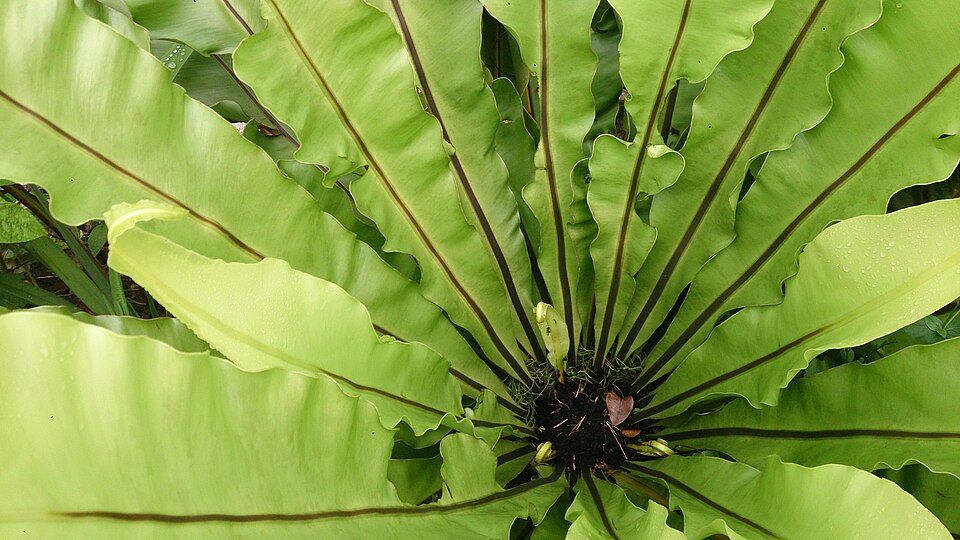
A bird’s nest fern holds its newest leaves in a place that is easy to forget when you water. At the middle of the plant, a small knot of upright fronds is taking shape. The broad outer leaves form a funnel toward that center. If most of the water you pour follows the funnel, the center may stay wet while the edges of the pot remain quite dry. Water around the outside of the rosette instead. It is easier to reach the growing medium, and you can see what happens when the water reaches the bottom of the pot.
The familiar houseplant is often labeled Asplenium nidus, but retailers also sell closely related ferns under the same common name. Some have smooth edges and some have ripples or crests. A reliable plant label can help you compare new and old fronds. The basic problem in a home is similar for many of them. In a pot, roots need access to both air and water. Start by finding out how much light reaches the growing position and how long water remains in the pot afterward.
Put a hand between the window and the fern
Assess the place where the leaves will actually be. Hold a hand above a sheet of white paper at leaf height during the brighter part of the day. A sharp dark shadow suggests direct light, while softer edges indicate more diffuse light. The test is relative, but it can show a difference between an open space near the window and the deep corner that looked bright from the door. Repeat on a sunny day if your first try was under cloud. A thin curtain or a little more distance from the glass can soften hours of strong afternoon sun.
Check temperatures where the fronds sit. In cold weather, leaves that touch a window may chill even when a room feels warm. A radiator or hot-air vent can dry them quickly. The plant should have space around its leaves, with no daily blast of hot or cold air. If you plan to place it in a bathroom, check that the window actually lights that corner. A room with occasional steam and little daylight may still give the fern too little light to maintain steady growth. If the light is good but dry air is a regular issue, try a room humidifier where it can be cleaned and used according to its instructions.
Keep track of the newest intact frond. Healthy fronds may extend slowly during a darker part of the year. A new leaf that stays pale while the plant is drenched in direct light suggests a different situation from one that emerges weakly in a dark corner. Move the plant when you have a reason, then give it several weeks to show new growth. An old scar or bleached spot will remain after you correct the light.
Make a watering check you can repeat
Take the nursery pot out of its decorative outer pot. Lift it before watering and notice its weight. Feel the medium with a finger at the edge, away from the crown, or test with a slender wooden skewer if the pot is deep. The upper layer should begin to lose moisture between waterings while the inner root zone stays lightly moist. The whole pot should not remain saturated. When the outer layer is drying and the pot feels noticeably lighter, it is time to check whether the plant needs water.
Use room-temperature water. Pour it slowly onto the mix around the perimeter of the pot, stopping if it runs straight through a dry channel. Give the first small pour time to soak in, then continue around the other side. Let the excess escape through the drainage holes. Empty a saucer or outer pot before putting the plant back. Leaving the plant in its drainage water makes it hard to judge what the lower roots are experiencing. If the pot keeps staying heavy for a long time after watering, investigate the medium and light before trying another full soak.
Avoid directing the stream into the rosette. If you spill a little water on the fronds, set the fern somewhere with normal air circulation so it can dry. Check wet leaf bases and the crown separately from the root zone when you suspect an issue. A fern sitting above a soggy interior can have dry leaves, particularly if there is air movement through the room. Equally, a wet crown can give you a misleading impression of how well the roots have been watered. Remembering both parts makes a useful difference when you are deciding what to do next.
Decide whether a new pot would solve anything
A healthy bird’s nest fern does not need a larger pot just because its leaves extend well beyond the rim. A dense, steadily expanding root ball that dries very quickly can be a reason to move up slightly. Damaged roots in a compacted, persistently wet mix may call for fresh medium and little or no increase in pot size. Slide the root ball out when you can do so without pulling on the leaf bases. Fine healthy roots can be naturally dark. Look for firm roots and avoid interpreting color alone as rot. A sour smell or easily collapsing roots gives you more evidence.
Select a pot with drainage holes and a modest increase in size if you are giving healthy roots room. A houseplant mix that holds some moisture but contains enough coarse material for air is easier to manage than garden soil. Set the plant with the crown at its previous height above the mix. Resist burying the leaf bases to make the rosette sit neatly. After watering, lean down to see how the medium sits at the base. If the plant settles markedly lower, adjust it while you can still lift the root ball without tearing new roots.
Keep the fern out of unusually strong light while it settles. Watch the newest unfolded leaf and the way the new medium dries. A new mix may move water differently from the old one. On the first two or three checks, feel both near the original root ball and near the outer edge. A wet ring of fresh mix can surround an unexpectedly dry old center, or the reverse. Understanding those two zones is more useful than carrying over the exact watering day you used for the old pot.
Recognize a healthy stripe and a damaged tip
Look underneath a mature frond. Regular dark lines on the underside can be sori, the structures that produce spores. Their orderly position on the leaf is a clue. You may see them on several older fronds while new ones remain plain. They are part of the fern. Randomly scattered bumps, sticky residue, or clumps around the leaf and stem suggest looking closer for pests such as scale. Isolate the plant while you investigate a possible infestation and seek identification before treating it.
A crisp tip can persist long after a dry afternoon or a period of irregular watering. Look at the rate at which damage appears rather than judging the whole plant by its oldest leaf. If several new fronds develop brown edges, check the pot's moisture patterns, hot drafts, fertilizer use, and possible mineral buildup. If the mix is well drained and undamaged, use a normal thorough watering and let the pot drain. Repeated heavy watering is a poor response to a pot that already smells sour. Reduce the stress you can identify and then watch the next leaf.
A dark, soft center or young leaves that detach with little pressure deserves attention. Set the fern apart from your other plants and inspect the state of the mix, the amount of water retained in the outer pot, and whether water regularly enters the crown. Seek a local horticultural diagnosis if the plant is declining quickly. Remove a leaf only when it is fully dead, clearly damaged or needed for examination. Use clean scissors near its base and keep the blades away from the central growing point.
Adjust care with the room
Start with three notes on the same day every week for a month. Record how bright the spot was, how the pot felt, and which new frond you saw. Water when the plant needs it, recording that separately. You may find that a corner stays cooler and darker after a tree outside grows leaves, or that a brighter window becomes much warmer in spring. Both can change the gap between waterings. A standing observation is helpful because it reminds you to check the fern even when it is drawing little attention.
Rotate the pot a little if light comes mostly from one side and you want a more even shape. Keep the fronds clear of glass and give the broad leaves room to arch without being pushed against furniture. When you see a fresh frond unfurl without a brown tip, mark the date and compare it with the old ones. That is a better measure of the care you are giving now. The fern can hold a record of previous conditions in its older leaves long after the room and your watering habits have changed.
Further reading: NC State Extension profile of the bird’s nest fern.