7 min read
Give a Christmas Cactus a Real Night Before It Sets Buds
Find a bright and pleasantly cool place that stays dark in the evening, then keep conditions steady when buds start to show.
On this page
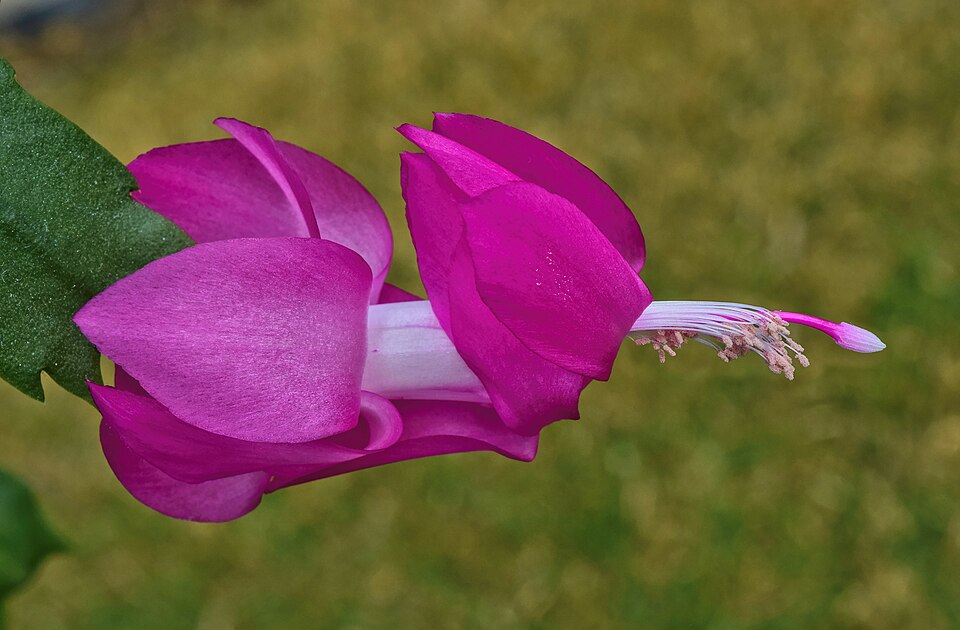
A Christmas cactus can be in a bright room by day and receive a second small day after sunset. A lamp by the chair or light from the hall can keep reaching the plant long after the window is dark. If you are trying to encourage flower buds, look at the evening location as well as the daytime one. Good light during the day and long uninterrupted nights at suitable temperatures give a healthy plant a more useful seasonal signal. The easiest way to provide that combination is often to find a single room where it occurs naturally.
Schlumbergera × buckleyi is a hybrid commonly sold and grown as Christmas cactus. Holiday cacti are often sold under interchangeable common names, so check the label and the shape of the stem segments. Inspect several stem segments to see the difference. Christmas cactus typically has rounded projections, while Thanksgiving cactus, Schlumbergera truncata, usually has distinctly pointed margins. A nursery label is a better starting point than the day the plant happened to flower. The two forms can respond to similar cues, while the exact flowering dates vary with the plant and conditions.
Find out when the room actually goes dark
Make an observation in the late afternoon and another after the last indoor lights usually go out. A sunny window in a front room may receive light through the curtains from outside or from a lamp used most evenings. A spare room may stay darker but offer weaker daytime light. The useful room supplies bright filtered light by day, long uninterrupted darkness when required and reasonably cool nights. Test the position near the leaves. Light at the doorway does not always reach the same intensity where the plant sits, and the light directly over it matters more.
University of Minnesota Extension describes about six weeks of shorter days for initiating flowers under suitable conditions. Where nights stay around 60 to 65 degrees Fahrenheit, it recommends at least about 12 hours of complete darkness each night for the period. Cooler nights near 55 degrees Fahrenheit can support bud formation under different day lengths, as the guidance explains. Use the recommendations as an example for healthy plants, not a promise of flowers on a particular date. Avoid drafts, very cold window glass and frost, and match the location to the actual plant.
If you can use a naturally dark room, arrange for the pot to stay there instead of transferring it into a dark space and back every day. Keep curtains and covers away from the stems. Do not use a place that gets hot, has poor airflow or gives the plant too little daytime light. A consistently useful position is easier to maintain than a dark corner that must be remembered and reset twice a day. Check what happens on weekends or a night when lights stay on later. Those are the times that can make a seemingly dark room behave differently.
Read temperature changes near the plant
Set a thermometer where it provides a useful reading at leaf height, away from direct contact with glass if possible. Check during the evening and early morning. A room that feels cool while you are sitting in it can warm when central heat comes on later. A plant next to a frequently opened door can experience brief much colder air than the thermometer suggests in the middle of the room. Look for a position without such swings. Both the seasonal nighttime temperature and stability after buds form matter.
Use a modest stable pot with suitable drainage and a mix that allows air around the roots. Holiday cacti differ from many desert cacti. They do not need to sit bone dry for long periods while actively growing, and they do poorly in heavy persistently wet mix. Test moisture before watering, water thoroughly when needed and let the excess run away. Empty trays and covers. A plant showing distress in wet soil needs assessment of drainage and roots. A healthy mature cactus in a usable pot does not need repotting simply because you plan to encourage flowering.
Inspect the stem joints and tip growth before reacting to absent buds. A growing plant that was recently moved or whose roots are still recovering can take time. Look for a normal range of firmness and fresh growth, and check for obvious pests or damage. A soft plant in a heavy wet pot has a problem that cooler nights and darkness alone will not correct. Reevaluate its root conditions before applying the same routine you use for a vigorous specimen. No special schedule is useful when you cannot tell whether the pot can drain.
Check the branch tips without changing the setting
Begin looking for buds once the plant has received several weeks of suitable nights. Note the date and the parts of the plant that show new buds first. Observe from the same angle rather than pulling the stems around. If one part gets better daytime light, it may show different progress. Keep a brief note if there were nighttime interruptions, a move or a change in room temperature. Those events make the flowering record more informative than writing down the final date alone.
Try to leave the plant in stable conditions after buds appear. Avoid sudden changes in temperature, humidity or direction of light, especially if the buds are still small. If its permanent display place differs greatly from where the buds developed, follow local horticultural guidance and choose the least disruptive change. Keep the pot clear of drying heaters and opening doors. A small spot where you can see the flowers without moving the plant is better than a display arrangement that alters the conditions each evening.
Water according to the medium and growing conditions throughout the flowering period, with free drainage. A few buds can drop for several reasons. Look at the recent history, including abrupt temperature swings, inconsistent watering and a change of position. One fallen bud does not explain every other branch. Check the remaining buds for steady development and look for a particularly exposed or wet side. Make a targeted change only if you can see a plausible problem. Maintaining the favorable conditions can be more useful than moving the plant repeatedly.
Keep a short light and temperature record
For the first week, check the chosen spot on three different evenings. Note the earliest time the plant is in darkness for the night and when light first reaches it again. Observe whether the room uses a lamp over the plant during that time. Do not put tape over lights or interfere with household equipment. Find a naturally darker location where the plant can also receive enough daylight. A room that is dark only when its occupants remember to turn off an extra lamp can be harder to use reliably than an ordinary window in a cooler quieter room.
Compare overnight temperature over several nights. A plant on the edge of an unheated room may get enough darkness but be cold enough to need protection from the glass. A plant next to a heater can be warmer than the rest of its room. Keep a note of the normal low reading and any unusually cold nights. This helps you judge whether a change in budding followed a temperature shift or one of the changes you made to the light routine. A single missed evening in the record does not tell you how all of the following weeks went.
When the first buds become visible, compare the new growth on two ends of the plant. If the ends nearest the window produced most of the buds, keep that orientation while they develop. Make a mark discreetly on the pot. Use it when replacing the inner container after watering so you can return it to a familiar direction. It is a small useful step when you want to keep a good position through the period in which the buds are becoming larger. Record when the first one opened and preserve the strongest parts of the setup for the next season.
Keep the routine after the flowers finish
Water less often once growth slows after flowering, as the actual pot and room require. Resume more active watering when growth returns. Keep suitable daylight and leave the stem ends clear. A growing cactus can be moved into an appropriate outdoor protected position in suitable warm weather, with acclimation and no frost exposure. Watch sun and rain if moving it. A pot that was predictable indoors can dry or saturate at a different rate outside. Reevaluate the location before the following autumn rather than relying solely on last year's dates.
Write down the first regular nights of suitable darkness, the date of visible buds and the flowers you actually saw. Keep the cultivar name with the note. If the plant flowered in the naturally cool dark room and remained sound, use that information again. If it made buds but lost them after a move, consider keeping next year's display in the same place where they developed. You can improve a lengthy seasonal routine by changing only what you observed. A rounded tip with a firm developing bud is better evidence than the holiday printed on a shop tag.
Further reading: University of Minnesota Extension guide to holiday cacti.