7 min read
Train a Wax Plant Without Losing Its Future Flowers
Give Hoya carnosa enough light, route its long vines and keep the short spurs that can bloom again.
On this page
A wax plant can spend months extending a slender vine before you see new leaves on it. Meanwhile an old stem may hold a stub that looks permanently spent. Those parts invite the same response from a pair of scissors, although they serve different purposes. The long tip is exploring for support, and a short spur that has held flowers can bloom again. If you take a moment to trace each growth before cutting, you can train the plant into a manageable shape without repeatedly removing its future flower sites.
This guide concerns Hoya carnosa. Its comparatively thick leaves and climbing stems suit a bright indoor position where the roots can drain between waterings. Plants sold as hoyas include several different species. Check the label if you can, and compare your new leaves with what you see on mature specimens. A cream-striped selection sometimes grows at a different pace from an all-green plant in the same room. Start by giving the plant a light position and a flexible route for its growth, then adjust the setup as you learn what it does.
Choose a place for a mature vine
A wax plant on the back of a shelf may look healthy for a while, particularly if its thick older leaves formed in very good light. Look instead at what it produces over a season. Widely spaced new leaves, slow establishment and growth reaching strongly toward a window can suggest an opportunity to give it brighter conditions. A young exploratory tip is expected to be bare at first, so wait to see how the rest of each stem develops. Move a plant gradually if its new position has direct sunlight. Bright diffuse light or a gentle period of morning sun is a sensible starting point for many homes.
Measure the space in front of the window as well as the light. Leave room to lift the pot out for watering and check the underside of leaves. A plant with a large circular support can be awkward to carry once stems pass its rim. If you can anchor the support inside the growing pot securely, the whole plant can move without detaching anything from the room. If the vine climbs a stationary frame, plan how you will reach the medium and drain the pot in place.
Think about nearby doors, curtains and winter heat. A vine that snakes into a moving curtain can lose new leaves when the curtains are drawn. Leaves against very cold glass or immediately above a hot vent endure conditions that are different from the room temperature. A modest frame set back a little from the glass can provide more useful room in the long run. Take a picture from the side when you place the pot. It will show where the tips were in relation to the light when you compare their growth later.
Make a route a new stem can follow
Start with the way the vine already bends. A flexible young stem can be guided gently toward a hoop or open trellis. An older one may be too stiff to take a tight turn. Support the stem under the bend and move it a little at a time. If the plant resists the route, choose a wider curve. A clean open support gives you more options than a close piece of mesh that you will have to unwind later. You can add a second anchor point when the tip extends again.
Use loose ties where the vine needs help staying in place. Put them around sections where you can see leaves and growth points clearly. A tie should keep the stem close without squeezing it. Leave the tender tip free, and check the ties during active growth. The material should be easy to remove without using blades right next to the vine. Avoid pinning a narrow new stem behind a thicker branch. The trapped part can be damaged when you reorient the plant or lift it for watering.
If the plant is already tangled, work in short passes. Choose one stem and follow it from the base. Mark it lightly if you have to put the plant down and resume later. Unwrap only the flexible parts you can move safely. Save harder decisions for when you can see where all the leaves and flower spurs are. Sometimes a smaller second ring is enough to route the newest stems while leaving the stiffest older part untouched. A plant can remain healthy with an uneven shape as long as foliage has light and the pot is accessible.
Recognize the flowering spur before pruning
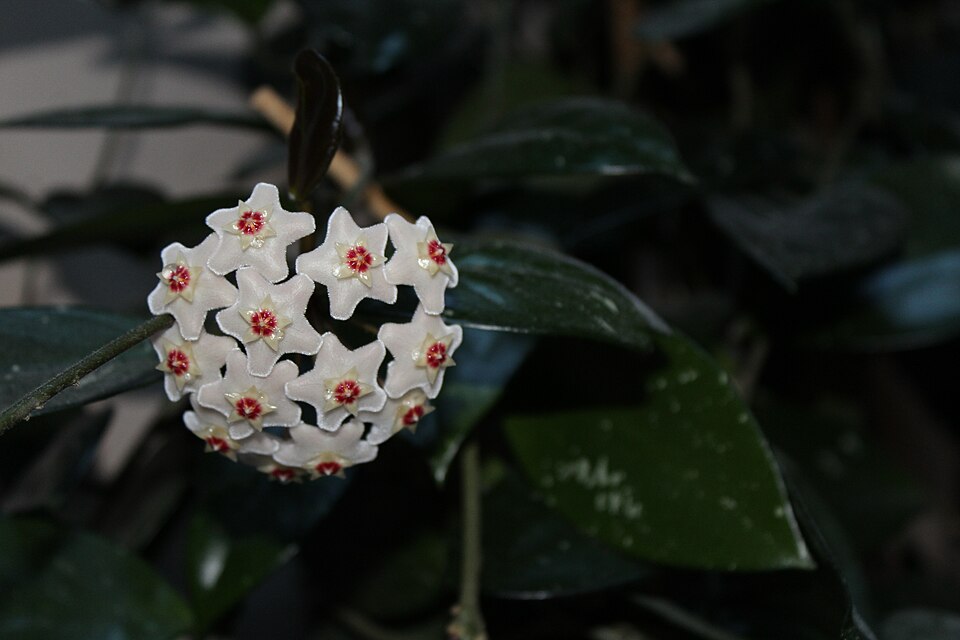
Find photographs of a Hoya carnosa flower cluster and note the short stalk where it attaches. That stalk, called a peduncle, may remain after the individual flowers fall. More flowers can appear there. Look for a small, firm spur in a position where a cluster has previously hung. Compare it with the very tip of a growing vine and with a dried leaf stalk. If you watched a cluster develop this year, use a soft tag on the neighboring support to remember where it was, leaving the short spur free.
Trim living vines only where you have a reason, such as damage or an unruly section that cannot fit on your support. Set the pot down in good light before making the cuts. Clean the scissors and decide where the remaining growth will go. Cut back dead material when you are sure it has dried, and preserve firm flowering spurs. There is no benefit to removing a spur simply because its previous cluster has ended. When buds are present, give the plant consistent conditions and delay optional repotting or major rearrangement.
Age and conditions affect flowering. A plant that is rooted and growing yet has never bloomed may still be settling in or may need brighter light. Check how the leaves respond to gradual changes and give it time. Repeatedly repotting to force a response makes it harder to learn which conditions helped. A short record of growth, position and buds can help you compare one season with the next without promising a display on a chosen date.
Water by checking the whole pot
Use a pot that drains, with a mix that allows air to return after watering. Lift it or check the medium a little below the surface before deciding to water. A bark-rich mix in a small pot near a bright window may dry faster than the same-sized container filled with a fine, dense compost. Water thoroughly when the medium has partly dried, then let it drain. Empty the outer pot or saucer. In a quieter season with less light and slower growth, you are likely to need to water less often.
A wrinkling leaf can prompt a useful check, but use the pot to interpret it. A plant with roots in an unusually dry mix and a light pot may need water. One in a heavy, sour, wet pot might have roots unable to take up enough moisture, and adding more water could deepen the problem. Examine the root ball gently if there are repeated signs of decline. Firm roots and a well aerated medium are more informative than a single hard-to-read change in the leaves. Look for pests around the leaf joints and ties if growth becomes sticky or distorted.
Repot when the root ball and rate of drying give you a reason. Use a modest increase in size for a healthy plant that is crowded. A much larger volume of new mix can stay wet longer than the established roots can use. Since the support is part of the arrangement, stabilize it before filling the pot and keep the plant around its earlier depth. Make sure the pot stands securely with the vine attached. A top-heavy plant on a windowsill is a nuisance to water and can fall when a long stem is bumped.
Choose the cuts you actually need
At the end of an active growing season, photograph the support from two sides. Mark the vines you trained and the spurs you want to keep. Work out where the next flexible shoot can go. If there is room near the top, a single new crosspiece may solve the crowding. If the long leaders need frequent turning, move future growth around a wider curve so you can reach the leaves. Start with what the vine is already doing and give it an easier direction.
A mature wax plant can be kept within a definite place even if an occasional new shoot travels beyond it. The first job is to support that shoot without breaking it. The second is to keep light reaching the leaves that will anchor later growth. When a dry cluster falls, look at the short stalk underneath and leave it in place if it remains firm. That quiet little piece of the plant is worth keeping.
If you keep more than one vine on the same support, put a separate tag near the base of each. That gives you a starting point if you later have to move one out of a shared pot. Leave enough slack that the label never has to be cut from the growing stem.
Further reading: NC State Extension profile of the wax plant.