7 min read
Keep a Patch of Eastern Red Columbine in Flower
Let selected seed capsules mature and make room for a few replacement plants without surrendering the path.
On this page
One spring, three eastern red columbines can make a convincing colony at the edge of a walk. By the following spring, the best of those plants may have disappeared and there may be a dozen small seedlings a foot away. The edge of the planting moves because individual columbines can be fairly short lived and their replacements start where seed happens to fall. You can accept some of that movement and still choose where you see the flowers. Leave a small area for seedlings, decide which capsules should open over it, and keep the neighboring path clear.
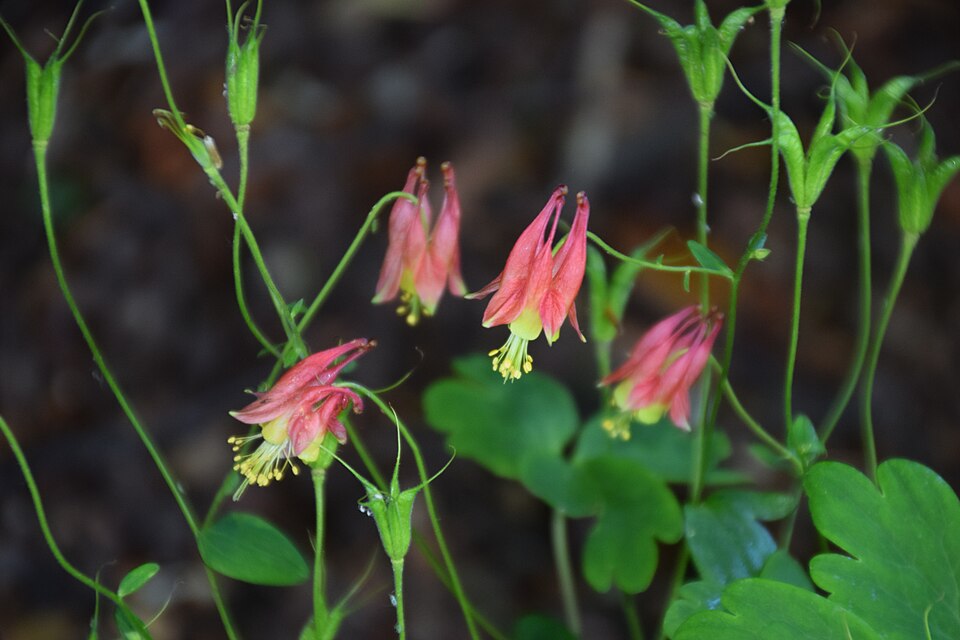
Eastern red columbine, Aquilegia canadensis, is native to eastern North America. It makes dangling red and yellow flowers with long spurs and can fit into a rocky or lightly shaded planting where the soil drains. Its native status and value to particular wildlife apply to the region, so check local guidance for its use elsewhere. In a suitable garden the method is simple. Keep the established plants that are flowering in the right place while giving a few of their younger neighbors a chance to develop. That takes a little attention at two separate times of the growing year.
Pick a place for the next generation
Set the first plant where you can see the flowers from a slight angle below them. On a slope, a spot above the walk offers that view without putting a growing crown underfoot. Near a low retaining edge, leave space for the soft stems to hang or lean without being brushed every time someone passes. The label's width is a starting point. Check what happens when the plant you brought home reaches full spread and starts to send flower stems out from the leaves. A reachable gap just beyond the clump is a useful place for the next generation.
Examine the ground after rain. Good drainage is valuable, and partial shade with some reliable moisture is a useful starting point. Conditions range from rocky ground to more sheltered soil, but a new seedling in a thin dry surface will need closer watching than an established plant. If the site has full sun, check whether the roots have adequate moisture during the period you hope the seedlings will establish. Look for a modest patch that has a little bare soil or loose litter and is free of dense creeping plants. A deep blanket of mulch can make seedling establishment hard to observe and can block seeds from reaching the soil.
Mark the patch relative to a fixed point, such as a path stone. A space about the size of two open hands can serve for a trial. Leave the adjacent path swept or cut while you check what emerges in the patch. Do not remove or disturb the tree roots if you are planting along a woodland edge. Tuck the colony into workable gaps where roots and drainage allow rather than digging a straight line across every space that receives the right light.
Decide which capsules are worth keeping
As the flowers fade, look at the clusters of pods that begin to develop on their stems. Choose a few healthy capsules from a plant already positioned over the area you want to fill. Label that stem with a loose marker if the rest of the planting will be deadheaded. Remove other spent stems where you want to limit spread, especially along the edge that hangs over gravel, paving or another planting. The cluster of pods that is still green can stay upright while it develops. Check again as the pods become drier and begin to open.
You can let some seeds fall where the stems already hang or collect mature seed before moving it by hand to the marked strip. Hold a clean paper bag beneath the dry capsules and handle the stem gently so you can see what fell. Keep different varieties labeled. Columbines can cross with neighbors, and a seedling need not repeat the red and yellow form if several types grow nearby. If preserving a particular identity matters, use sound known-source material and refer to local guidance rather than assuming every volunteer is identical to a named plant.
When the path edge produces more plants than you can use, you do not need more seed there that season. Deadhead that side and leave a few capsules on a stem farther into the bed if you still want replacements. Start with less than you think you need. A short stretch that receives scattered seed is easier to monitor than a blanket of seeds spread across the entire border. It also lets untouched plants in the rest of the bed occupy their own small openings.
Give scattered seedlings a good start
A fall sowing where winters provide suitable cold, moist conditions can help seed overcome dormancy. For a deliberate indoor start, consult a regional guide and the seed supplier's instructions. Wisconsin Extension describes chilling seed under moist conditions for several weeks. The exact response can depend on the seed and growing conditions. Early seedlings may stay small for their first season and commonly need another year before flowering. A patch can therefore contain mature flowers, visible young leaf rosettes and a gap that contains nothing you can identify until later in the season.
When you see seedlings in the marked strip, compare their early leaves with the leaves on the parent plants. Use a local identification reference if you are unsure. Let a few likely plants develop until you can recognize their leaf shape. Remove vigorous weeds that are clearly something else while you can still lift them without disturbing the new plants. Keep the soil from drying severely during establishment, but avoid washing away the tiny plants when you water. A short inspection after a heavy rain can show whether part of the patch was covered by loose leaves or soil.
Thin early if seedlings crowd together. Save the ones that have enough room to become a mature clump and are placed where the flowers will be welcome. If you need to move a small plant, do it in suitable cool conditions while its roots can be lifted with a little surrounding soil. Water it in and mark its new place. Avoid moving a big clump solely because the first season of flowers appeared a few inches away from the original plan. New seedlings offer repeated chances to shape the border without uprooting well established plants.
Mark seedlings in two different parts of the strip if you can. Those in a little open gravel may be easier to recognize, while new plants in deeper litter can be harder to see and need less frequent watering. Leave a small undisturbed area between them. When you rake nearby, lift debris by hand from around the marked plants so you do not uproot them with the rake. Record this location before leaves cover the markers in autumn. That gives you something to check before taking more seed or setting out another nursery clump in the same space.
Keep cosmetic damage in perspective
A pale winding track along a leaflet can be a leafminer gallery. Small amounts of this damage are often cosmetic on eastern red columbine. Compare that with missing chunks or whole leaf margins, which can result from another kind of feeding such as sawfly larvae. Look both above and below the leaves before deciding what happened. A few marked leaves on a vigorous clump are easier to live with when the plant has enough healthy foliage to continue growing. If active damage is extensive, identify the problem with local horticultural resources before choosing a response.
Remove badly collapsed foliage if it is smothering the younger plants. Leave still-useful green leaves to support the established clump. Check whether cleanup is about appearance or about a recurring problem. Ordinary aging late in the season does not necessarily tell you to change the soil or spray the whole bed. When several seedlings in one pocket fail while those a little farther away stay healthy, review drainage, light and surface cover before assuming they all had the same pest.
Revisit the patch after the first real gap
Review the strip when one mature plant disappears or stops flowering. If established seedlings are present in good positions, give them time. If they all came up close to the pavement, choose another capsule next season or sow into a slightly different patch. Record where the light and moisture actually supported the young plants. A site that looks right in spring can be drier than expected once the leaves of surrounding trees open.
Keep the view that prompted the planting. On a low bank, two plants above the footpath and one farther back may be enough to show the hanging flowers clearly. On a wide border you can keep more replacements without making them compete for one small patch of soil. Mark the youngest established plants before you tidy the bed for winter. The flowers will move a little over the years. Give them a direction and the colony can stay useful even as the individual plants change.
Further reading: University of Wisconsin Extension guide to eastern red columbine.